Showing posts with label Jaime Martorana. Show all posts

Thursday, April 16, 2015

Wrapping Up Your Internship

As the semester comes to an end, you’re likely beginning end of semester projects and thinking about finals (or procrastinating on thinking about finals). But classes aren't the only things you need to consider finalizing this month. Unless you plan on continuing into the summer, your internship is also close to ending. So here are just a few things you should check off your intern to-do list before heading out of the office one last time.
  • Wrap up projects. If you've been given any long-term projects to work on for the semester, begin finalizing them. Whether it’s a master media list or research assignment, put on the finishing touches before sending it over to your supervisor. Go through old to-do lists and notes from the last few weeks to ensure everything has been completed and crossed off. This way, you know for sure there are no longstanding projects uncompleted.
  •  Collect your portfolio pieces. Go through all the assignments you've done over the semester and decide which are best for your portfolio. Be sure to save pieces that demonstrate a variation of work that you've done over the course of your internship. This is also a good time to update your resume to reflect what you accomplished.
  • Get connected. If you haven’t already, connect on LinkedIn with your supervisors, fellow interns and other members of the office you have worked closely with. This way, your LinkedIn network can reflect your newly extended in-person network. It also allows your supervisors to write recommendations and endorse you for skills you learned during your internship.
  • Don’t forget to say thank you! The final and most important step to take at the end of your internship is to write thank you cards (by hand, the old school way) for your supervisors and bosses. Be sure to include what you learned from working with them and your plans to stay in touch. Small thank you gifts don’t hurt either. Who doesn't need a nice Temple coffee mug?



Thursday, April 2, 2015

Healthy Habits for the Busy Lifestyle

It’s that time of year again, when all you can hear is coughing in your large lecture class or the sneezing coming from half the cubes in your office. Everyone is getting sick and you know it’s only a matter of time until you've caught it too. While getting a cold is sometimes unavoidable, there are some preventative measures you can take. Here are some simply and realistic ways to stay healthy while juggling that buys schedule.

  • Increase your iron. Not getting enough iron in your diet can lead to tiredness and even depression. Fight fatigue by increasing iron-rich food into your diet like oatmeal, spinach and lean meats.
  • Smoothies on-the-go. Maximum fruits and vitamins to boost your immune system with minimum effort. Simply divide foods like berries, bananas, and other fruits into several Ziploc bags and pop them in the freezer.  When you’re ready, just put the frozen ingredients in a blender with yogurt or milk and you've got a quick and health meal.
  • Hydrate. Staying hydrated might be the easiest and most effective way to stay healthy. Drinking plenty of water keeps you feeling energized and focused, and can be a great alternative to coffee believe it or not! It even helps keep colds at bay. Bring a reusable water bottle with you throughout the day to help remind you to stay hydrated.
  • Vitamin C. Even with all these vitamins, if you still feel yourself starting to sick, up your intake of vitamin C. It’s as simple as a glass of orange juice with breakfast or Emergen-C, a powered vitamin supplement, mixed some hot water in lieu of your morning tea.


Although it may seem like the most difficult, the best way to ward off sickness is sleep! Those all-nighters and early morning classes are cutting into your sleeping time, lowering your immune system and making you more susceptible to illness. Making time for a little extra sleep now will keep you from having to take a whole day off to recover later.  

Thursday, March 19, 2015

Meerkat: SXSW's Hottest App

It seems like there is always a new and inventive app trending that it’s sometimes difficult to keep up. The latest taking the app store by storm is Meerkat, a user-friendly iPhone app which allows users to livestream video. It also links (well, linked, but more on that later) to Twitter, allowing users to comment and share through tweets. It’s quickly becoming the hottest trend at this year’s South by Southwest festival (SXSW), an annual festival celebrating music, film, and interactive media.


Twitter recently confirmed their purchase of Meerkat’s competitor Periscope. Now they are limiting Meerkat’s access to the “Twitter graph,” effectively making it impossible for users to find and follow other Meerkat users. It’s a setback and experts are skeptical the app can recover.

Whether it’s a long-lasting service or a SXSW trend, here’s everything you need to know about this videosharing app so you can get to “Meerkating” too.

  • It’s only developed for iOS , allowing users to live stream from iPhones or iPads. Sorry Android users.
  •  Previously, when Meerkat users start streaming, the app would automatically tweet out a link to the video. The app “borrows” your social network from Twitter so you don’t need to search and add your current social media following on yet another outlet.
  • Since Twitter acquired livestreaming competitor Periscope, they have removed the app’s access to this “graph,” giving Meerkat a hesitant future. 
  • Twitter only gave Meerkat cofounder Ben Rubin two hours’ notice before cutting off their access. 
  • Although SXSW continues until Sunday, many assume Meerkat will receive the unofficial “it” app of the festival.

It’s not all bad news for current and future Meerkat users, though. You can still post videos on Twitter and log in to Meerkat using your Twitter password/username.  The difference is that Twitter will no longer automatically send notifications telling your followers when you are streaming live.


Give it a try and let us know what you think of this up and coming app!

Thursday, March 12, 2015

Getting Ready for PRSSA’s TU Invitational

It’s that time of year again! Temple PRSSA is hosting their second annual TU Invitational next Saturday, March 21 in the Howard Gittis Student Center.  The invitational welcomes chapter members and young professionals to learn, discuss and network with professionals in the communications industry at a one-day conference. This year’s theme is Broad Street: Your Road to Professional Development.

Last year's TU Invitational program

The invitational is over a week away, but there’s still plenty you can do in the meantime to prepare. Here are just a few things you should check off your pre-invitational to-do list:
  • Order your business cards. If you put your order in soon, you’ll likely receive your custom business cards in time for the invitational. Although you’re not a professional (yet!), business cards are still a vital networking tool. You should include information like your name, phone number, email address and social media links such as LinkedIn and Twitter if they’re professional and appropriate. Don’t forget to add a special element to make them stand out from the crowd like a personal logo.
  • Do your research. Before the invitational, be sure to look up details on each of the speakers and keynote. Knowing background information like alma mater, previous position and current position will help you decide if they are a PR pro you would like to network with at the event.
  • Prepare your elevator pitch. If you decide to introduce yourself to speakers with the intention of later applying for an internship or job, it’s best to be prepared with an elevator pitch. The speaker will likely be meeting many other students so you need to make a quick impression. Don’t forget to hand them your business card too.
  • Reserve your spot! Be sure to purchase your ticket if you haven’t already. Early bird prices expire tomorrow, so the sooner your get your ticket, the better. You can get all the details and register here.
What are your best recommendations for members preparing for TU Invitational?

Thursday, February 19, 2015

Mistakes You Might be Making at Your Internship

Internships are an ideal opportunity to learn about the industry in real-world experiences. Of course, you won’t know everything about public relations and, as a student, no one expects you to. But there are a few big but easily fixable mistakes you might be making at your internship.

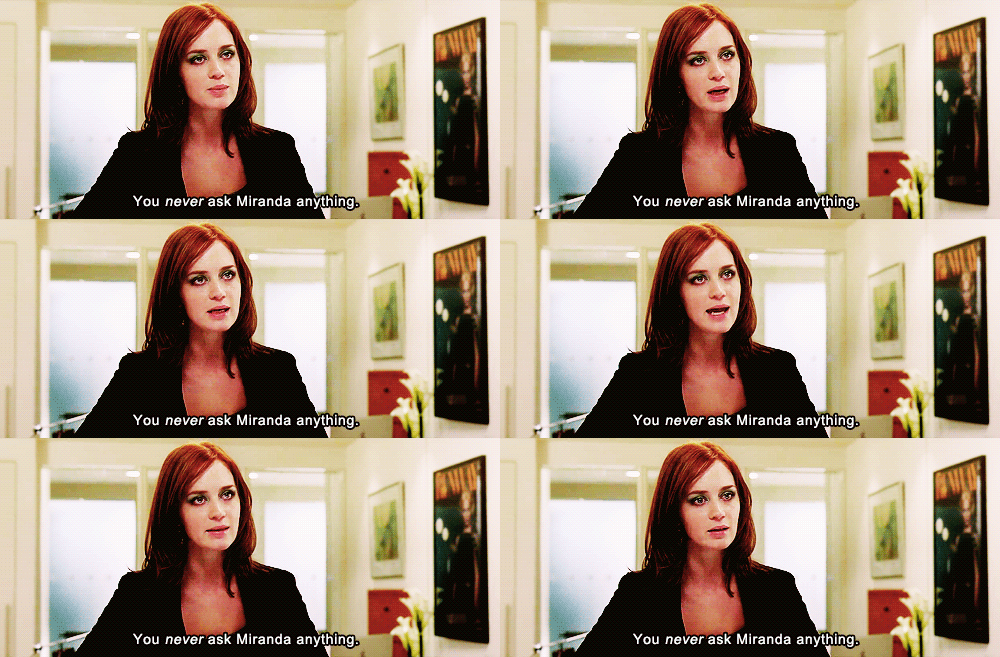
  • Not asking questions. You may feel like asking your supervisor a question makes it seem like you don’t know what you’re doing. NOT true! Asking a question when you don’t understand an assignment or an industry term (i.e.: “trade pubs”) shows that you are ready to learn and willing to make sure you get the most from your internship.
  • Not paying attention to other departments. Even when a meeting or assignment doesn't concern your department, pay attention to what’s going on. Everything that happens within the organization or company will likely have a trickle-down effect, influencing work you may be given.
  • Not asking for feedback. Sometimes supervisors either don’t think to give feedback or simply forget. When an office gets hectic and a press release need to be written quickly, it’s hard for them to remember to stop and work with their intern. Asking for feedback shows that you want to learn and are invested in your internship experience.
  • Waiting for assignments. Supervisors may not think to be continually giving you assignments which may leave you sitting, twiddling your thumbs. But speaking up and asking if there’s any additional work, even if it’s for a different department, demonstrates your commitment to your internship. It will also help you learn more about the organization. Running to get coffee for the HR department may not be very prestigious but at least now you know when the HR office is!
Even if you are guilty of a few of these internship sins, they’re simple fixes! An easy way to ensure you aren't making these common intern mistakes is to treat your internship like a full-time, permanent job.


Thursday, February 5, 2015

What is Your Interview Body Language Saying?

Interviews can be a stressful ordeal. It feels like everything from the experience on your resume to your interview outfit are being scrutinized and evaluated. And often, interviewers really are looking at ever little detail. But one of the biggest communicators during an interview may be something that isn't said at all. Your body language often communicates much more than anything you may say. Check out these body language mistakes to see what message you might be communicating in an interview.

  • Posture. Your posture actually says quite a lot. Leaning forward comes off as aggressive while sitting back seems lazy or arrogant. Thankfully there is a happy middle, literally. Sitting up tall in a more neutral position, while it may not feel the most natural, is the ideal posture to impress your interviewer.
  • Hands. Not knowing what to do with your hands is often people’s biggest downfalls in interviews. Refrain from leaving them in your pockets or behind your back, making you look stiff and unapproachable. Instead, gesture with them in a natural and conversational way to reinforce what you are actually saying.
  • Eyes. Eye contact is particularly important but can be tricky. Distracted eye movements often make it seem like someone isn't being truthful but staring comes off as aggressive and uncomfortable. Instead, make natural eye contact and avoid quick shifts in eye movements like looking down or away suddenly.
  • Hair. Playing with your hair is a common and unconscious thing that many women do. Whether it’s a nervous tick or a distraction, it often comes off as unprofessional. The best way to avoid this diversion is to simply wear your hair back for your interview.
A surefire way to know if you are making any of these mistakes is to practice! By video recording a mock interview and reviewing it, you can see how your body language is coming across. Don’t let the great things you’re saying be overshadowed by the messages your body language is conveying.

Thursday, January 29, 2015

What Social Media Trend is Keeping Myspace Alive?

It’s no secret that Myspace is no longer the leading site in social networking. In fact, it’s likely the last site you would consider when naming social media platforms. But there is one online trend, however, that is helping keep the social networking site alive and, ironically, it’s one you post on other platforms- Throwback Thursday. Yes, Myspace users are logging in to find their weekly #TBTs.


Myspace analytics show that there is an increase in visitors to the site on Thursdays as users search their profiles looking for old photos from the mid-2000s. According to Tim Vanderhook, CEO of Viant, Inc., the parent company of Specific Media which owns Myspace, the site is bringing 50.6 million unique visitors each month. Not bad for a site that was launched 12 years ago and peaked in 2008.

“Myspace was an early photo-sharing platform,” said Vanderhook. “So we still see a lot of people coming back to access old photos. They may not visit every day but they come back once a week or once a month.”

Fortunately, Myspace is not completely reliant on the public’s need for Throwback Thursday Instagram posts. In 2012 it decided to rebrand itself, with the help of Justin Timberlake, as a platform for new music sharing and discovery. Now, the site mainly attracts the 17-25 year-old segment who is interested in the site’s music sharing and discovery function. In an effort to keep up with even developing trends and technology, they also released a free Myspace app. The app includes an ad-supported radio service similar to Pandora or Spotify as well as a GIF creator.


The wavering popularity of social networking sites comes with the territory of being an online medium. Although Myspace has likely seen their peak, it is clear they are making a strong effort to evolve along with social media trends, and benefiting from them.

Thursday, January 22, 2015

#SOTU: State of the Union Goes Social


President Obama gave the annual State of the Union address Tuesday evening, a topic that wasn't just trending in traditional media but on social media as well. I myself viewed the address on one screen and had my Twitter feed on another to keep up with public responses. I was surprised to find that my newsfeed consisted of almost exclusively State of the Union posts (along with a number of Flyers vs. Penguins tweets as the game between the rivals headed into overtime).

According to the White House’s Twitter account, it was the most interactive State of the Union address ever with 1.2 million views and Twitter reported that over 2.6 million tweets were posted using the hashtag #SOTU. Facebook also had similar results, announcing that “5.7 million people on Facebook made 13.8 million interactions (posts, likes, comments, shares) related to the President’s State of the Union address” that day.

In an effort to create a broader audience for the traditionally “old-media” event, the White House communications team  decided to revamp the way they promote the address. This year, they focused not just on traditional media like newspapers and television, but creating videos, digital op-eds and even six-second GIFs. The White House twitter account also live tweeted infographics, images and quotes in real time as Obama discussed various topics like sustainable energy and education costs. The same images appeared on television in a split screen with the live speech itself.

“To not have an aggressive social media strategy in 2015 would be the equivalent of not having an aggressive TV strategy in the 1950s.” –Dan Pfeiffer, White House Director of Communications

This year was the first time ever that the White House released the SOTU speech to the public prior to the address. In keeping with efforts to bring politics to the digital generation, it was released via Medium, a blogging platform created by the founders of Twitter.

But out of all the points President Obama made in his address to the American people, the most talked about moment on social media was by far:


Thursday, January 15, 2015

Chipotle Pulls Pork from Stores- Why They Got it Right


Chipotle Mexican Grill has been on the rise in the fast food industry, known for serving “food with integrity.” The company was founded on the ideas of delicious food made from the best ingredients. After founder and CEO Steve Ells learned how meat and produce is mass produced in the US, sustainability, responsible farming and animal welfare were added to the Chipotle mission.

Many big name corporations say they are committed to serving local and ethically farmed food. Chipotle, on the other hand, actually is. The chain recently stopped selling pork, used as a key ingredient in a number of their dishes from burritos to salads. The meat was pulled from one-third of its locations, nearly 600 stores nationwide, when an audit of one of their suppliers revealed that their way of producing meat was not up to the standards set by the fast food chain.

“We could fill that shortfall with conventionally raised pork, but the animal welfare standards fall well short of our requirements, and (we) simply aren't willing to make that compromise,” said Chipotle Communications Director Chris Arnold, according to Reuters.

By pulling unethically produced pork from many of their stores, Chipotle stayed consistent with their brand as well as their ethical standards at the risk of losing customers and capital. It’s likely that customers will now have an even stronger loyalty to the brand thanks to their public dedication to the ethical treatment of animals. Had Chipotle continued to sell pork knowingly produced lower than these standards, it would have the potential to destroy not only the image of the company but it’s ever increasing position in the fast food market. Through their dedication to serving “food with integrity,” Chipotle was able to strengthen their brand and avoided a major PR crisis.


Chipotle has yet to release any official press releases and has not stated when they expect their pork products to be back.

Thursday, January 8, 2015

PR Resolutions and How to Keep Them

The dreaded New Year’s Resolution. Each January, we choose a goal to focus on for the next 12 months only to see our efforts fizzle out in weeks. We often focus on resolutions that affect us personally like changing out diet, exercise schedule or saving/spending habits. This year, instead try some simple but beneficial professional resolutions that are easy to keep.

  • Keep up with local and national news. Sitting down with a cup of coffee and skimming The Inquirer may seem like an impossible task, plus we all know PR pros drink their coffee on the go. But it doesn't have to be that way. Download a variation of news outlets’ apps onto your smartphone and check them throughout the day. Changing your apps’ settings will allow you to receive live updates when big stories are posted.  This lets you to stay up to date with local stories, national news and international affairs.
  • Stay in touch with contacts. You've spent the last year networking with PR pros and students alike. Now it’s time to do some work to maintain those relationships. This can be done easier than you think. Send a simple personalized email to the members of your network wishing them all the best this year or even a personalized Tweet just to say hello.  This will not only help foster these relationships but will keep you fresh in their mind if any opportunities may arise in the upcoming year.
  • Write more. We all known writing is a key skill to have in PR and, as the old saying goes, practice makes perfect. Joining PRSSA’s newsletter committee offers an opportunity to work on your writing while getting your article published in the newsletter. Another great way to both practice your writing and add to your portfolio is to volunteer to write posts for PRowl's blog. You can also create a blog of your own focusing on personal or professional interests. Check out PRowl Firm Director Amber Burns’ blog or Assistant Firm Director JordanWashington’s for inspiration.


We want to hear from you, what’s your PR New Year’s Resolution? 

Thursday, December 11, 2014

How to Follow Up with Busy People

We've all experienced the feeling of wanting to follow up with a professional, whether it is about that internship position you've been gunning for or to schedule an informational interview. We even experience it when working with the media, trying to contact a journalist regarding a pitch we emailed earlier that day. It can get disappointing when we don’t hear back from a contact, but don’t get discouraged too quickly! As we all know, PR pros are busy so here are a few easy ways to effectively follow up with people who have little time to spare:


  • Effective Subject Line. First things first, you need to gain their attention with a subject line that will stand out. They likely get tons of emails each day, so you don’t want yours to get lost in the crowd.
  • Introduce yourself. Be sure to give an introduction (or reintroduce yourself) so they know who their reading an email from. It’s also a great place to mention a mutual contact or referral.
  • Keep it Short. Industry professionals don’t have time to read a long and detailed email. Effectively getting your point across quickly with the least amount of work is essential. Cover your bases of why, what and why. 
  • Do Your Homework. Do a quick Google search before sending your email. Mentioning an award they received recently or a new client they landed shows that you put in the effort. Chances are they’ll be more likely to get back to you.  
  • Know Your Boundary. Of course it’s encouraged to send a follow up email when trying to contact a busy professional. But there comes a point when you need to realize that, unfortunately, they likely will not get back to you.

Lastly, if you plan in sending a follow up email, be sure to give them enough time respond. That being said, you also want to contact them again in a timely manner. Remember, don’t take it personally when your emails aren't immediately responded to, PR pros have a lot on their plate.


Thursday, December 4, 2014

Star Wars: The Jedi Masters of Entertainment PR

Last week, Walt Disney Studios released the first teaser trailer for the much anticipated film Star Wars: The Force Awakens, the seventh installment of the Star Wars franchise.  As the fifth highest-grossing movie franchise in history, the series is synonymous with entertainment for decades. With these films, writer and director George Lucas, effectively changed the way the movie industry publicized films.

You can watch the teaser here.

Marvel may have blockbuster films and widespread products, but Star Wars did it first. Series like The Hunger Games may be hyping up a film a year in advance, but Star Wars beat them to it by about 40 years. The series made its silver screen debut in 1977 and has been dominating pop culture ever since. After its release, the films became cultural phenomenon spawning collectibles, video games and even pajamas. The franchise brought a whole new element to the film industry- merchandising on a massive scale.

Before its release, Lucas had the idea to begin building up anticipation for the film months in advance. That promotional tactic of using teaser trailers with long lead time seemed ridiculous at the time, but has now become the new model for publicizing films.

(source: Mashable)

Rumors of the latest Star Wars installation began back in 2013 when a photo of Lucas and Hollywood sci-fi director J.J. Abrams was “leaked” before the director announcement was made. Since then, the studio was silent, allowing the public to generate their own speculation. Like Lucas’ long-lead teaser trailer tactic, studio generated hype has been dominating in film publicity.


Lucas must have had the right idea. Since the teaser trailer was released last week, Star Wars has been a hot topic on social media, trending on Twitter for days. The film doesn't hit theaters until December 2015 but the trailer certainly leaves plenty for fans to discuss in the meantime, continuing to build hype. Hopefully, the film can deliver. 

Thursday, November 20, 2014

Tourism PR: Cities Need PR Too

When you think about public relations, a lot of areas come to mind like agency, entertainment, and event planning. One industry that you may not think of is tourism PR. It was not until after my study abroad experience that I began to consider this as a viable field I wanted to pursue. It combined all the things I loved- Philadelphia, traveling, and public relations. The only problem was I knew little to nothing about this rarely mentioned industry. But a few information interviews later, I've come up with some “need to know” points about travel PR:


  • It’s not just about travel. This industry isn't simply about marketing to travelers so they visit your city. You’ll be working with a lot of different industries that encompass the visitor experience from arts and entertainment to local hotels and hospitality.
  • You need to know your markets. Tourism PR works to reach the domestic, international, and niche markets, so it’s important to know who your audience is. These can include either a specific city like Boston or London or a group like the LGBT community. Being aware of the culture or needs of who you’re reaching will affect your messaging.
  • Bloggers are changing the job. The increase in travel bloggers is affecting the way tourism PR professionals are doing their job. Now, travel bloggers are pitching THEM! These freelance bloggers pitch their post ideas in the hopes of getting their stories picked up and purchased.
  • Sponsorships are increasing. Not only are travel bloggers changing the industry, but so is sponsored content. The future of tourism PR will see less traditional pitching to media outlets and more sponsorships.


Tourism PR isn't simply about promoting your city in the hopes of attracting visitors. It encompasses so many elements and industries that it’s often similar to agency life. But of course the most important thing to remember about tourism PR is that it takes a passion for your city and a love for showing what is has to offer.

Thursday, November 13, 2014

Accountability: Why It's Better to Take the Blame

Many of my topic ideas for my posts are inspired by daily interactions from class, work, or the office and this week’s post is no different. As a general business minor, I take classes that often present a different perspective or approach to communication. But every now and then, there’s applicable overlap between business and public relations. Earlier this week in my Environmental Law class, we were discussing law case studies, in many of which companies that were fined a large sum of money for failing to complete forms regarding their plant’s emissions.  All of the companies discussed used the defense that they were unaware of the law requiring them to complete these forms and therefore should not be fined.

My professor, a practicing lawyer in environmental law, noted that ignorance of a law does not mean you should not be held accountable. But accountability isn’t only important in business and law, but in workplace communication as well. Here are a few key reasons why you should practice personal accountability:
  • Displays responsibility. By recognizing that you made a mistake and taking the blame instead of pointing a finger, you show your supervisor that you are mature and dependable. Although you may be at fault, admitting so means you are dependable and responsible- a person your supervisor can rely on.
  • Shows leadership.  By taking accountability for your actions, it shows you’re willing to admit your mistakes. This is an essential characteristic for leadership that your boss will recognize.  
  • Promotes workplace success. When all employees are accountable for their actions, the organization can work more effectively and successfully.
Making excuses, such as lack of knowledge, reflects poorly on you as an employee. It is your responsibility to make sure you DO know or make sure to find out when you don’t. In situations in which you are in the wrong, it’s best to take responsibility for your mistake. At the end of the day, your superior will remember your accountability more than the error you made in the first place.

Thursday, November 6, 2014

Traditional vs. Digital: Why You Shouldn't Choose One

Digital seems to be the newest and greatest thing in communication in the last twenty years. It’s like a shiny new toy that everyone has to have and can’t think of anything else. In the industry’s great excitement over digital, they've nearly completely forgotten about traditional media and the value they hold. But PR pros don’t have to choose between either digital or traditional because the most effective communication campaign engages its audience using a mix of both.

Pros of Print
  • It’s an experience. Studies have proven that print material creates a sensory experience for readers as they thumb through pages or write out notes. They’re also more likely to remember information they read in print through this physical interaction compared to reading it on screen.
  • Print permanence. Longevity may not be your first thought when you think of print but readers tend to revisit printed material even after they’ve read it. This allows your message to get across time after time.
  • Credibility. People generally tend to believe the written word so there’s a level of credibility that comes with print. A message seems more legitimate to readers when it is presented in print as opposed to online.

Pros of Digital
  • It’s timely. Digital allows you to share your message instantly. This way, your content can stay current and up to date. Possibly the best example of the power of being timely is Oreo’s notorious Super Bowl blackout Tweet
  • Highly interactive. Digital allows for interactivity with a target audience in a way print could never achieve. Readers can comment, share and engage with others bringing the experience to a whole new level.
  • Available analytics. With digital, it’s simple to track who is reading your content, how long they’re on your page and even if they share it. Having access to this information will allow you to better target your content in the future.

You’re able to reach your target audience in a number of ways by using both media.  Creating a balance in your message with a marriage of traditional and digital media is the ideal way to create an effective public relations campaign.  

Thursday, October 30, 2014

The Art of Storytelling: Why It Isn't Just for Authors

“You need to be able to write.” “As a PR pro, you’ll still need math!” “Networking is essential in public relations.” These are phrases we continually hear as communications students. But one sentence I have heard much less frequently is, “you need to be able to tell a story.” When you strip away all the elements of PR like the press releases, the analytics and the networking, it is essentially about communicating someone’s story to the world. So why is it that the ability to storytell is such an essential skill to have?


“PR is all about looking for the story that will bring a brand’s message to life.” –Luke Mackay, Edelman
  • Stories make people feel. Creating a positive emotion that the public links to your client or brand is key when building a reputation. Generating a story consumers identify with can also create strong brand loyalty. This is something no amount of advertising or research will gain for you.
  • It enhances facts. Facts alone can be uninteresting and boring but when they’re worked into a story, your audience becomes more attentive. They are also more likely to retain information when it is woven into a plot.
  • They inspire conversation.  A compelling story with a strong message gets people talking about your client or brand. Audiences can tell when it’s authentic and will respond accordingly- either with positive or negative feedback.

Storytelling requires a few elements to be truly effective in the same way as classic storytelling. There needs to be a plot with development, conflict and resolution. They also require a hero or heroine the audience can identify with on some level. And finally, great storytelling requires a compelling tale to draw audiences in.


There is one important point to keep in mind when using storytelling to communicate about your client- don’t let the story become bigger than the message itself. Use the story as a vehicle to clearly convey your message to your target audience.

Thursday, October 23, 2014

Why Mentorship Matters

Just last week, I announced the mentorship matches for fall 2014, a semester in which we saw an increase in both mentor and mentee applications. Each year, the program seems to expand as more members become aware of the program and the benefits of participating in mentorship. Even at PRSSA National Conference a few weeks ago, PR pros continually mentioned the importance of mentorship and how that played a part in their professional success. So as the PRSSA mentorship matches begin to meet and develop their relationships, I wanted to highlight the top reasons why mentorship matters.


  • Mentee benefits. Mentees receive valuable knowledge from those who have first-hand experience. They also find a source of guidance and support in their mentor. Mentees can rely on their mentors to cheer them on when they succeed and help them up when they fail.
  • Mentor benefits. The relationship is mutually beneficial, giving mentors the opportunity to enhance their leadership skills. They are also able to develop a professional and/or personal relationship with their mentees, expanding their networking and hopefully creating a friendship in the process. And of course, there’s that feeling of gratification mentors knowing they were instrumental in helping another succeed.
  • Success. A 2006 study done by market research firm Gartner showed that in a company, mentees were promoted five times more frequently than those who did not have a mentor. This is a perfect example of the great success that comes from participating in a mentorship program.

Mentorship is a clear win-win for everyone involved. It benefits both the mentors and the mentees but also strengthens the organization. PRSSA has many members who, thanks to the mentorship program, have passed along advice, encouraged involvement and worked to make the chapter the best it can be.


Do you have a mentor who has helped you succeed? We want to hear your story! 

Thursday, October 16, 2014

#PRSSANC: Jason Mollica’s Keys to Media Interview Success

Although PRSSA National Conference has come to an end, there are still plenty of helpful insights to share from our experience in Washington, DC. Sessions highlighted an array of public relations topics with prominent speakers from Ketchum, Edelman, the Smithsonian and even Neiman Marcus. Also among those notable speakers was JRMComm President and Temple University alum Jason Mollica, who spoke to a packed house on the dos and don’ts of media relations. Entitled “Understanding What the Media Want,” his session included how to effectively communicate with media and even a few helpful steps of pitching. But the topic that stood out most to me was his tips for preparing your client (or even yourself) for a media interview.

(Photo by PRowl staff member Shaun Luberski)

In classes and internships, we learn how to communicate with the media on behalf of our client through press releases or social media. But what happens when we need to let the client speak for themselves? Here are a few of Jason’s tips for executing a successful interview with the media.
  • Pick a spokesperson. Have a knowledgeable and quotable spokesperson that is accessible to the media. If possible, have the interview conducted in a location that is comfortable for the spokesperson; a retail company’s CEO in one of their stores, for example.
  • Craft a key message. A key message that is consistent throughout the interview will allow for more effective communication. 
  • Create talking points. By creating talking points, the interviewee is able to stay on track and avoid rambling. This also helps to keep answer short, allowing for better quotability.  
  • Take charge. It’s important to take charge when answering questions from the media. They will potentially ask tough or controversial questions but the interviewer has control to frame the message in their responses. 
  • Never go off the record. This one is pretty self-explanatory. Jason’s advice, “if you don’t want it on the news, don’t say it.”
There are a few other key takeaways from this session including the importance of doing your research, knowing your audience and, of course, the need to always be transparent.

Thursday, October 9, 2014

How to Make the Most of Your National Conference Experience, Without Leaving Philly!

PRSSA National Conference is one of three large-scale events in conjunction with PRSSA National. It is the perfect opportunity for members to gain insight into the profession, learn more about certain PR industries and meet other members from across the country. This year’s conference is in Washington, DC hosted by American University’s chapter. It would be ideal for each school to be able to fund every member’s attendance, despite the distance but unfortunately it’s just not a reality for many. However, there are plenty of ways to stay up to date with national conference happenings, even from Philadelphia.

(Source: PRSSA)
  • Search the hashtag. From Twitter to Instagram, searching #PRSSANC will make it seem like you’re actually there! The conference is full of active social media users (it’s a PR conference afterall) who will surely be posting photos of speakers, live Tweets and more.
  • Follow other members. In order to stay in tune with all things National Conference, there are a few key accounts you should be following. PRSSANational and PRSSA National Conference are guaranteed to keep their followers well-informed. You can also check in to the accounts of the National Committee members. National Committee is the executive board equivalent for PRSSA National. There are a number of Temple PRSSA and PRowl executive board members going as well who will be working to update the members who aren’t able to attend.
  • Read the programming. Before conference starts, check out the programming schedule. If there are any speakers you would have attended had you been at conference, search their name on Twitter for mentions. Attendees will likely live Tweet quotes and important points they make.
  • Check back! Be sure to check back with PRowl’s blog next week for a recap. It will include events and speaker highlights so you don’t miss a thing.

When staying updated with PRSSA National Conference, remember that social media is your best tool. It will allow you to see photos, videos, quotes and speakers that you will make you feel like you're actually there!

Thursday, October 2, 2014

Your Guide to Becoming a Self-Starter


As students in a competitive field, we’re constantly asking PR pros “how can we stand out from the competition?” Will another internship or that really great blog post you wrote make a difference? Maybe. But one thing that is sure to differentiate your from your peers- being a self-starter. According to Dictionary.com, self-starters are people “who begin work or undertake a project on his or her own initiative, without needing to be told or encouraged to do so.”
Here are a few easy steps that will turn your into a motivated self-starter! 
  • First to arrive, last to leave. There’s something to this cliché adage. Believe it or not, your supervisor will notice your commitment to the overall success of the organization. It also shows your enthusiasm for the work you’re doing.
  • Do your homework. Doing extra research on your agency’s newest client or their latest award shows you’re not only invested in the firm but that you go above and beyond what’s required. It shows your boss that you aren’t afraid of taking initiative. 
  • Ask question. You may feel like asking questions makes you appear unsure or inexperienced. But the reality is, asking questions shows you’re willing and interested in learning more. It also lets your supervisor know you’re not too proud to admit that you don’t actually know something.
  • Get out of your comfort zone. Don’t be afraid to take on complex projects or unfamiliar assignments. Seizing new opportunities will help expand your experiences and the next time the assignment comes up, you’ll be able to take it on with confidence.

After spending most of our lives in school being given strict instructions and rubrics, taking initiative without much direction can be challenging. But one of the aspects of a self-starter is that they are not afraid to make mistakes and, more importantly, they learn from them! So the next time you’re in the office, try out these self-starter tips and think "what would Leslie Knope do?"