Saturday, October 12, 2013

“Samantha Jones” PR verses Real Public Relations

Brushing shoulders with only the elite, standing in your brand new Christian LouBoutin heels, while staring out at the New York City skyline, all in a nights work. You may ask yourself, “What kind of profession will lead to that scenario?”  Well ask Samantha Jones, public relations expert.  Her character, played by Kim Cattrall on the hit TV series Sex and the City, depicts the life as a PR agent to be the most laid back and glamorous profession. 

Personally, my interest in the field sparked from Ms. Jones’s life style.   Who wouldn’t want to be in control of the VIP lists for extravagant events?  However, anyone within this field knows that this type of PR is not typical. 

One major difference between Samantha Jones and a real PR professional is the perspective on work.  As Jones’ character put it during the TV show, “I don’t believe in the Republican party or the Democratic party.  I just believe in parties.”  A party to Jones is a well-planned event to PR professionals.  Every event put together by a PR professional requires numerous little details that people outside this career sometimes overlook.  Research, promoting, networking, and planning are all crucial for a successful outcome. 

Luckily for Jones, she not only gets into and throws the best parties; she also has a never-ending client list.  You will never catch her staying late at the office, working on different pitches for new clients. Original ideas and theories need to be tested with PR considering the field is always changing.  With change comes a fresh challenge; thus, Jones never altering her strategies when working with new clients creates an unrealistic persona for this career.  Facing the task of constant change is what makes public relations a round-the-clock job.

All play and no work may be Samantha Jones’ way of tackling the PR profession, but when it comes to reality, public relations always challenges.


This guest blog post was written by PRowl Staff Member Brittany Barish.

Thursday, October 10, 2013

Bypassing Writer's Block


If you are having trouble finding something to put on paper or formulating words to create a sentence, you are experiencing writer's block. I could agree and say experiencing the inability to write a paper probably knocked on every professional writer and non-writer's door at least once and according to research, most times it stems from anxiety and fear of writing.

As for me, I experience writer's block when I'm nervous about a topic or if I'm not too confident on a topic. Being too nit picky can cause your flow of ideas and creativity to not be present in your writing seeing that you are putting too much of your focus on not making mistakes.

Whenever you are experiencing writer's block while writing a paper, follow the following tips below:

Avoid strict writing rules that inhibit writers- One strict rule is when professors always stress the need for beginning every paragraph with a topic sentence. Yes these rules are probably there to guide you while writing your paper but focusing solely on these rules can be a cause for your writer's block.  Loosen up, write and when you are revising your paper then fix your paper to suit your professor's styling.

Create short sections, and write one section at a time-  Taking things in small batches always seems to work. Therefore, write your paper in sections so that you can focus on one idea at a time. This allows your writing to flow much easier.

Take a break- If you are stressing it, your creativity and writing will not flow. Moving away from your paper and taking a break is definitely needed at times. Take a walk or a nap and then get back to it. Now that your mind is refreshed, I can guarantee you ideas will begin flowing.


What other methods do you use when you are experiencing writer's block? We will love to know!

Wednesday, October 9, 2013

Making 140 Count

Getting a clear and concise Tweet out with only 140 character at your disposal can be a tricky craft. As public relations professionals, we often have to make a lot happen within that small text box. In all honesty, that small amount of text is usually the amount of engagement readers have with full length pieces. You want your message to be read, understood, and engaged with. Using a dull choice of words, or having to continue your message into another tweet increases the chances followers choosing to scroll on by. 

As challenging as navigating the Twitter world can be, these tips for making your 140 characters pop should help you out for future social media planning:
  • Use verbs and show action. People respond to to calls to action more so than general statements. Use enticing verbs that draw people in, and make them wonder what the next steps will be. Big market words such as "drive" or "highlight" are always great to tap into. And don't forget to consider your audience when selecting choice verbs. If you know your following is fond of videos, instead of tweeting "new video," say "Watch this!" The instruction in the later makes followers more likely to engage.
  • Add images wisely. As great as images are to add flare to content, they can often take up unnecessary characters. Plan ahead when your tweets will contain images, and then generate short, catchy captions that will trigger the follower's curiosity. Let the photo tell the story, and rely on short, witty, and concise wording to draw follower's in.
  • Don't overload on hashtags. As catchy as they may be, using too many hashatgs can take up characters that could have been used to better get your message across. All hashtag usage should be done strategically. What will your message gain from having the hashtag there? Does your message really need it to be effective?
  • Review before you tweet. PR professionals pride ourselves on our writing abilities. As eloquent as your tweet may sound, it's likely that you can cut down the wordiness and make it equally as attention grabbing. Read the tweet aloud; what is the gist of your message? Can you say this in fewer words or characters? Are all of your punctuation choices necessary? 
Twitter has definitely proven itself as a social media platform that is here to stay. Learning how to best navigate through it is the key.

What do you do to make your tweets stand out in 140 characters or less? Share with us in the comments!

Tuesday, October 8, 2013

Sony's Telekinetic Prank: A Lesson in Promoting Your Brand

This Monday a video went viral showing an elaborate prank that Sony constructed to promote the motion picture remake of Stephen King's classic Carrie.  The prank was pulled off in a New York City coffee shop and featured a telekinetic surprise from an actor set up at the café.  Read full details of the making and execution of the prank here and watch the video below.

Sony went above and beyond when thinking about ways to promote this movie.  It is so much bigger and more effective than a commercial or print ad.  Shock value is one of the factors of newsworthiness, and a promotional prank like this is sure to get media coverage. 

There are so many people vying for attention and coverage that it has become difficult to break through the noise and get a message to an audience.  Sony demonstrated a unique way to draw attention and promote your brand or product.

Do you think this will start a trend of more "stunt"-like advertising and PR moves? We want to hear your thoughts.

Monday, October 7, 2013

When Personal Profiles Should Stop Being So Personal

At what age did you get your first Twitter account? How about Facebook, MySpace, Bebo? Think back to some of your earliest posts, or maybe even a post from last week. Were you quoting the latest rap song or networking with potential employers?

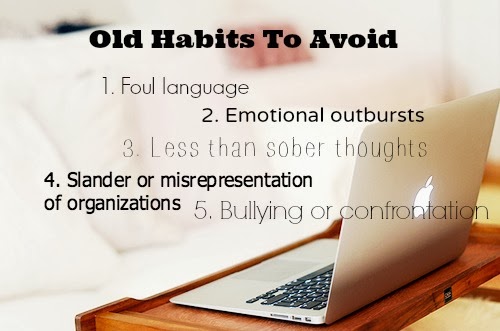
Some students often miss the transition from college kid to aspiring professional when it comes to social media interaction. Gone are the days when we can talk about how much we hate our ex during an alcohol-induced Twitter rant without any consequences…or did those days ever really exist? Now more than ever in this new technology age, we have to be even more diligent about the content we choose to share on social networks.


Not only do employers check social networks during their hiring process, but there has also been an increase of people who have gotten their foot in the door through those networks. Social networks are becoming a great place to network with the exact contact you need for the company you’ve been eyeing. They are also becoming a new hub for employers to post new job openings, internships, or open interviews. However, if you are still exhibiting unprofessional behavior online, chances are these opportunities will pass you by. Make sure to avoid these five habits and you should be just fine.

Are there a few things you should clean out of your social networks? Tell us about your own experience of creating a more professional appearance online.

Sunday, October 6, 2013

Temple University President Neil Theobald Proves To Have Strong Public Relations

Since his induction in January of 2013 Dr. Neil Theobald has demonstrated excellent public relations. He has pledged to help finance higher education and reduce student debt at Temple University. In recent weeks Theobald has gone on PCN-TV to discuss his campaign, “Financing Higher Education and Student Loan Debt”. The president is aware that the students of Temple University are his primary public and he aims to serve us to the best of his ability.

In an interview with Temple University News the president discussed his values as president. “People have such a positive vision of this university and what it can be. I love to stop, chat and learn students’ priorities and what we can do better. That’s always my primary question. Any suggestions they have, I want to talk to students,” said the president.  Neil Theobald has also decided to reach out to students by teaching a course here at Temple University.

As president of the university, Dr. Theobald has displayed strong public relations tactics. He is aware of whom his target audience is and what needs to be done to improve relations with our community. Student debt is one of the greatest problems with our university and Dr. Theobald’s primary objective is to battle that issue. He has been transparent in discussing his objectives as a leader. Transparency is a quality all public relations practitioners should strive to acquire.

Dr. Theobald has revealed that one of his main goals as president is to build trust with his students by offering feedback and assistance. The president strives to have a mutually beneficial relationship with our community and shows admirable public relations as president of our university.

This guest blog post was written by PRowl Staff Member Ben Coleman.

Saturday, October 5, 2013

Making The Most Of Your Remote Internship

My internship this fall is a little different than most. Instead of going into an office two or three days a week, I work either from home or the computer lab. Because the company does not have enough space in their office for me, I am able to work from any place I want.

Here are three tips to make the most out of your remote internship!

1. Do not hesitate to reach out. Just because you are not in the office each day, that does not mean you are any less a part of the company as other employees. Plan conference calls or Skype calls that can connect you to the home office.
2. Be proactive and willing. Do not let the fact that there is not enough room for you at the office limit your interaction with the company. I make sure to set up weekly meetings with my boss at either a restaurant, coffee shop or book store so that we can sit down and talk. In a land of constant emails, it is easier to meet face-to-face rather than exchanging 20 or so emails.
3. Act like you are in the office environment. Some days I find it hard to change from my pajamas into real clothes, get out of bed and get started on my intern duties. What I found as a best practice of making the most out of working remotely is acting like I am going to the office. I wake up in the morning, dress in business casual and bring all of my work to the library or computer lab. I sit down as though I am at an office and work as though I am there. This means ignoring my cell phone, avoiding checking personal social media accounts and email and dedicating my time to my internship.


Although it can be difficult to motivate yourself, a remote internship is a great experience, helps you practice self-control and allows you to make the most out of your internship opportunity.

This guest blog post was written by Temple PRSSA President Brianna Rooney.